A Structural Shift in European Monetary Policy
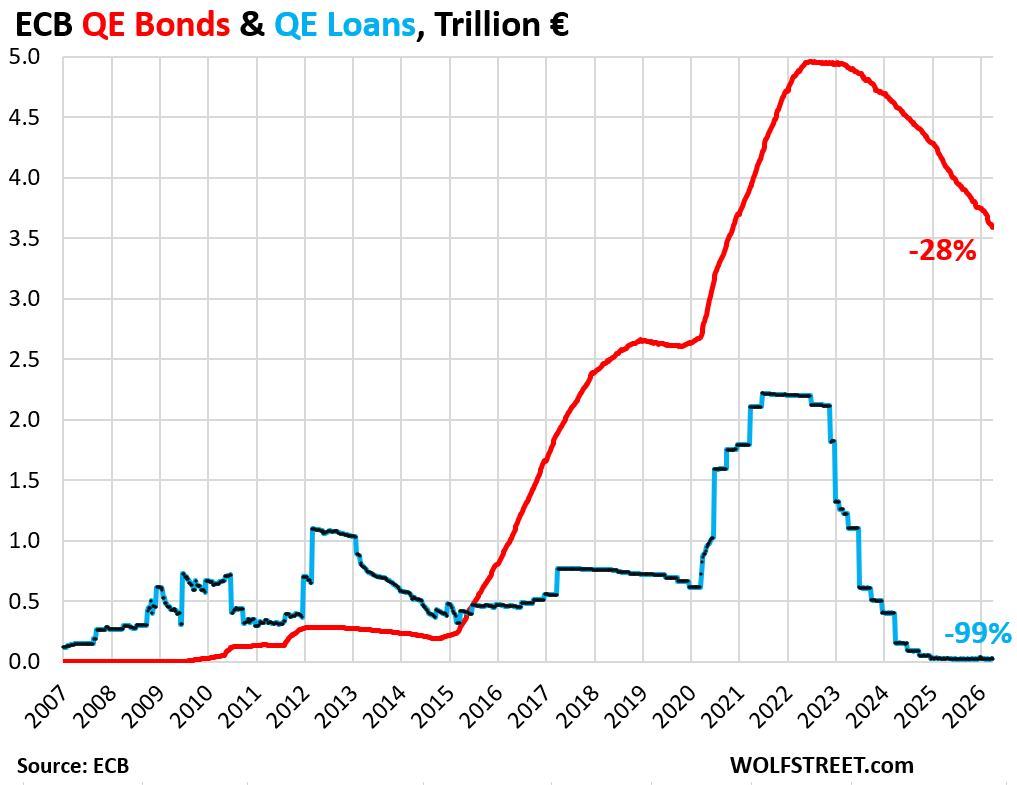
The European Central Bank (ECB) is quietly achieving a significant milestone in its post-pandemic monetary policy normalization. While global markets have remained fixated on the timing of interest rate pivots, the ECB has been aggressively executing a balance sheet reduction strategy that has now seen half of its pandemic-era Quantitative Easing (QE) assets removed from the system. As of the latest reporting, the central bank shed an additional €66 billion in March alone, cementing a trajectory that signals a definitive end to the era of ultra-loose liquidity.
This aggressive pace of Quantitative Tightening (QT) underscores a fundamental shift in the ECB’s operational philosophy. Unlike the Federal Reserve, which maintains a more static approach to its valuation models, the ECB conducts a quarterly "mark-to-market" exercise on its gold holdings. This accounting nuance resulted in another significant write-up of its gold reserves during the first quarter, providing a buffer as the bank navigates the complex task of shrinking its balance sheet without triggering excessive volatility in the sovereign bond markets.
The Mechanics of the Wind-down
To understand the magnitude of this move, one must look at the peak of the ECB’s asset purchase programs. During the height of the stimulus era, the ECB’s balance sheet ballooned as it sought to stave off deflationary pressures and support the Eurozone economy. Today, the focus has shifted entirely to inflation targeting and the restoration of traditional monetary transmission mechanisms.
By shedding €66 billion in a single month, the ECB is demonstrating a high degree of confidence in the banking sector’s liquidity levels. This reduction is not merely a technical adjustment; it is a tightening of financial conditions that effectively pushes market participants to rely on private capital rather than central bank support. The 50% reduction from the peak represents a massive withdrawal of "excess liquidity" that once defined the European financial landscape.
Market Implications: What Traders Need to Know
For institutional traders and macro investors, the ECB’s balance sheet trajectory is a critical leading indicator. First, the reduction in assets held by the central bank suggests that the "hidden" support for peripheral European debt is diminishing. As the ECB steps back as the primary buyer, market forces are increasingly dictating the yields of sovereign bonds, which could lead to wider spreads between German Bunds and southern European benchmarks.
Furthermore, the gold valuation adjustment warrants close attention. By marking its gold reserves to market, the ECB is effectively bolstering its equity position. This provides the bank with more flexibility to absorb potential losses on its bond portfolio as interest rates remain elevated for longer than many had initially anticipated. Investors should monitor how these gold valuations impact the bank's ability to transfer profits—or absorb losses—in future fiscal cycles.
Looking Ahead: The Path to Normalization
As the ECB moves past the 50% threshold of its QE asset reduction, the market will be looking for signals regarding the terminal size of the balance sheet. The central bank is walking a tightrope: maintaining enough liquidity to ensure financial stability while ensuring that the contractionary effect of QT does not stifle economic growth.
Looking forward, the key variable remains the interaction between QT and the ECB’s interest rate path. If the economy shows signs of significant cooling, the bank may face pressure to slow the pace of balance sheet reduction. However, for now, the data suggests that the ECB is committed to the path of normalization, prioritizing the preservation of its monetary policy toolkit over the comfort of accommodative financial conditions. Traders should prepare for continued volatility in fixed-income markets as the ECB’s presence as a market buyer continues to wane.