Stocks● Neutral
Artemis II Splashdown Validates Commercial Space Infrastructure
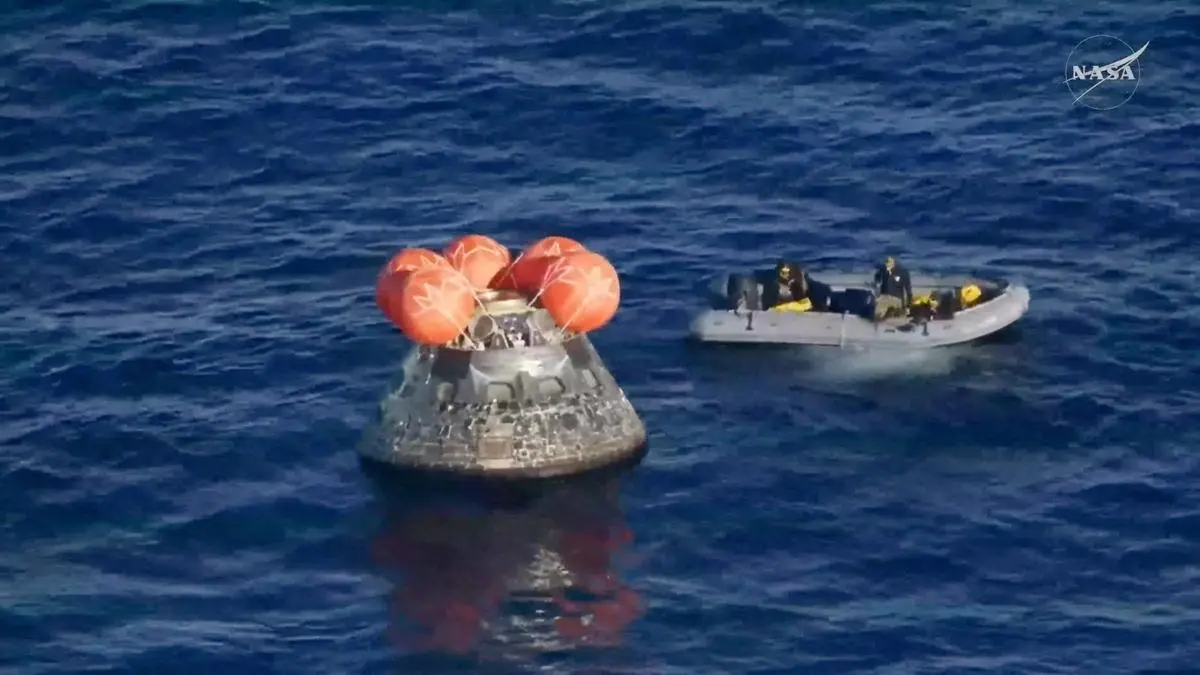
Successful Orion re-entry de-risks deep-space hardware, signaling a shift toward permanent lunar infrastructure and accelerated commercial cargo timelines.
Continue with
A Precision Return to Earth
In a display of engineering precision and operational excellence, the Artemis II crew successfully returned to Earth today, concluding a historic lunar flyby that has captivated both the scientific community and the investment world. The mission, which represented a significant milestone in deep space exploration, culminated in a dramatic splashdown in the Pacific Ocean off the coast of San Diego, confirming the reliability of the Orion spacecraft’s heat shield and recovery systems.
For the aerospace industry, the safe return of the Artemis II astronauts is more than a symbolic victory; it is a critical validation of the hardware and life-support systems required for sustained human presence in deep space. The mission’s successful completion serves as the foundational proof-of-concept for the upcoming Artemis III lunar landing, a venture that carries immense weight for the future of the burgeoning space economy.
The Strategic Importance of Lunar Infrastructure
The Artemis II mission was designed to push the boundaries of current spaceflight capabilities, involving a record-breaking journey into deep space that tested navigation, communication, and human endurance. By successfully navigating the lunar flyby and executing a flawless re-entry, NASA and its commercial partners have effectively de-risked the technical hurdles that have historically plagued long-duration space missions.
From a market perspective, this mission signals a shift from purely experimental space exploration toward the establishment of permanent lunar infrastructure. The data gathered during this flyby provides the essential metrics required for private firms—many of whom are sub-contracted to support the Artemis program—to refine their own launch, propulsion, and habitation technologies. As the barriers to entry for lunar orbit and surface operations lower, the commercial viability of space-based logistics and resource extraction comes into sharper focus.