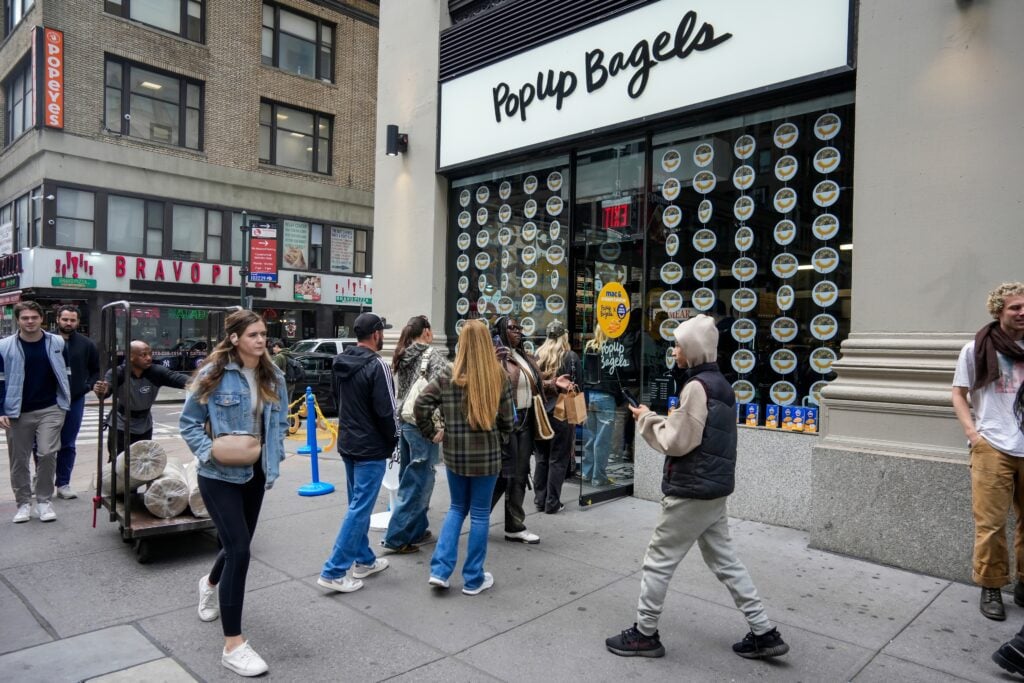
The Rise of the 'Viral' Bakery
In a move that underscores the venture capital sector’s persistent appetite for high-growth consumer brands, PopUp Bagels has secured a significant investment from Tiger Global. The funding round, which has propelled the budding bagel chain to a valuation of $300 million, marks a meteoric ascent for a company that has leveraged social media virality to disrupt the traditional quick-service restaurant (QSR) space.
For investors, this valuation represents a fivefold increase in the company's worth, signaling a massive vote of confidence from one of the world's most influential investment firms. PopUp Bagels, which began as a pandemic-era experiment in the founder’s home kitchen, has successfully transformed into a cultural phenomenon, characterized by long queues and an exclusive, scarcity-driven business model.
Understanding the Valuation Surge
Tiger Global’s entry into the cap table of a niche bakery chain is notable for its scale. A $300 million valuation for a company primarily focused on a single, albeit popular, food item suggests that institutional investors are looking beyond current revenue streams toward the brand’s scalability and potential for national or global expansion.
Historically, the QSR sector has seen massive valuations for chains that can replicate a 'cult' following at scale. However, achieving a fivefold growth in valuation in a relatively short timeframe is rare, even in the venture-backed food and beverage space. The investment suggests that Tiger Global is betting on PopUp Bagels' ability to transition from a local 'viral' sensation to a standardized, high-margin retail operation.
Market Implications: Why It Matters to Investors
While PopUp Bagels remains a private entity, this funding round serves as a bellwether for the broader consumer discretionary sector. In an environment where the cost of capital has historically tightened, such a high valuation indicates that there is still significant liquidity available for brands that can demonstrate exceptional consumer engagement metrics and a distinct competitive moat.
For traders and analysts monitoring the retail landscape, this development highlights the shifting dynamics in the food industry. Legacy players are increasingly challenged by 'digitally native' brands that prioritize brand identity and social media presence over traditional brick-and-mortar marketing. The success of PopUp Bagels reflects a shift in consumer behavior where the product is secondary to the 'experience' of acquisition, a trend that major food conglomerates are now scrambling to emulate through acquisitions and internal innovation.
Divergent Paths: Private vs. Public Markets
It is worth noting the contrast between this private funding news and the current sentiment in public equity markets. While private capital is aggressively chasing high-growth, niche consumer brands, public market investors remain focused on the broader macroeconomic outlook. For instance, tech giants like Meta Platforms (NASDAQ:META) continue to navigate a landscape defined by ad-spend fluctuations and AI-driven growth, which remains the primary driver of market sentiment for retail investors.
However, the success of the PopUp Bagels funding round proves that venture capital remains a distinct asset class with its own risk-reward calculus, often decoupled from the immediate volatility of the S&P 500 or the NASDAQ.
What to Watch Next
As PopUp Bagels integrates this capital, market observers will be looking for signs of rapid expansion. The critical test for the company will be maintaining its 'viral' cachet while scaling operations—a hurdle that has tripped up many fast-casual predecessors.
Investors should monitor whether this move triggers a wave of similar investments in 'niche' food startups, potentially setting the stage for a new cycle of IPOs in the consumer sector over the next 24 to 36 months. As the brand scales, the key metrics to watch will be unit-level economics, cost of customer acquisition, and the ability to maintain premium pricing power in a crowded breakfast category.