Back to Markets
Stocks● Neutral

Yield Hunting in the Lion City: 4 Singaporean Dividend Stalwarts for Income-Focused Portfolios

April 12, 2026 at 11:30 PMBy AlphaScalaSource: thesmartinvestor.com.sg
Yield Hunting in the Lion City: 4 Singaporean Dividend Stalwarts for Income-Focused Portfolios
DBS.SIO39.SI

With global markets remaining volatile, Singapore's blue-chip stocks offer a reliable path to consistent income. We explore four key SGX-listed companies that stand out for their robust dividend policies and defensive market positioning.

The Case for Singaporean Income

In an era of macroeconomic uncertainty and fluctuating interest rate expectations, income-focused investors are increasingly looking toward the Singapore Exchange (SGX) as a bastion of stability. While global markets grapple with volatility, Singapore’s blue-chip landscape offers a unique combination of high-yield reliability and robust corporate governance. For traders and investors seeking to build 'sleep-well-at-night' (SWAN) portfolios, focusing on companies with consistent payout histories is a proven strategy to mitigate downside risk.

Singaporean equities have long been favored by yield-hungry investors due to the city-state's business-friendly environment and the prevalence of Real Estate Investment Trusts (REITs) and banking giants that prioritize shareholder returns. By shifting focus toward these entities, investors can capture steady cash flows that often outperform traditional fixed-income instruments in the current yield environment.

The Dividend Four: Stability in Focus

For those looking to diversify their income streams, four specific names stand out on the SGX, offering a blend of defensive characteristics and sustainable dividend yields.

First, the banking sector remains the cornerstone of Singapore’s index performance. DBS Group (DBS.SI) stands out as a primary income vehicle. As Southeast Asia’s largest lender, DBS has demonstrated an exceptional ability to maintain payout ratios while navigating shifting interest rate cycles. Its consistent dividend growth has made it a favorite for long-term income investors seeking exposure to the regional financial engine.

Secondly, OCBC Bank (O39.SI) provides a compelling alternative in the financial space. Known for its conservative risk management and strong capital ratios, OCBC offers investors a reliable dividend yield that is well-supported by its diversified wealth management and insurance business, Great Eastern Holdings.

Moving into the real estate and infrastructure space, Singtel (Z74.SI) serves as a defensive backbone for many portfolios. As a dominant telecommunications provider, Singtel offers the kind of recurring revenue profile that supports consistent dividend distributions. Despite the capital-intensive nature of 5G infrastructure rollouts, the company’s strategic shift toward digital services has provided the necessary cash flow to sustain its payout policy.

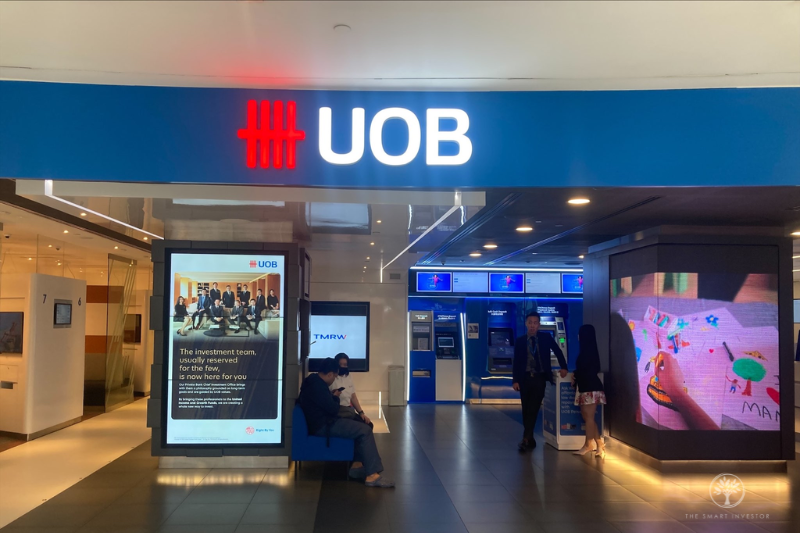
Finally, UOB (U11.SI) rounds out the list of income stalwarts. Often characterized by its strong presence in the SME banking sector across ASEAN, UOB provides a stable yield that benefits from the bank’s disciplined approach to credit costs. Like its peer banks, UOB’s dividend policy is underpinned by a commitment to returning excess capital to shareholders, making it a staple for income-focused portfolios.

Market Implications for Traders

For the active trader, these stocks offer more than just yield; they represent defensive anchors during periods of market turbulence. When broader indices like the Straits Times Index (STI) face downward pressure, high-dividend stocks often exhibit lower beta, providing a cushion for the overall portfolio.

However, investors must remain cognizant of the 'ex-dividend' calendar and the impact of withholding taxes where applicable. Furthermore, while these dividends are attractive, they should be weighed against the potential for capital appreciation. Traders should monitor the price-to-book (P/B) ratios of these financial institutions, as they often trade in correlation with global interest rate expectations. When rates are expected to stay 'higher for longer,' banks generally benefit from wider net interest margins (NIMs), which supports their dividend-paying capacity.

Forward-Looking Outlook

Looking ahead, the sustainability of these dividends will depend heavily on the macroeconomic health of the ASEAN region and the global interest rate trajectory. Investors should watch for upcoming quarterly earnings reports, specifically focusing on management commentary regarding dividend guidance and capital management strategies. As we head into the next fiscal quarter, the focus will remain on whether these firms can maintain their payout ratios amidst potential slowing loan growth or shifts in inflationary pressures. For those seeking passive income, these four Singaporean giants remain the gold standard for reliable, recurring returns.