Why AI and Volatility Demand a Connected GTM Strategy

Forrester’s Connected GTM Framework offers a roadmap for firms to align strategy, planning, and execution amidst the pressures of AI integration and market volatility.
The New Reality for Go-To-Market Teams
Artificial intelligence and persistent market volatility have changed the rules for sales and marketing leaders. Companies can no longer afford to treat strategy, planning, and execution as separate silos. Forrester’s latest research highlights that a disconnected approach to the market now creates unacceptable risks for firms looking to maintain growth.
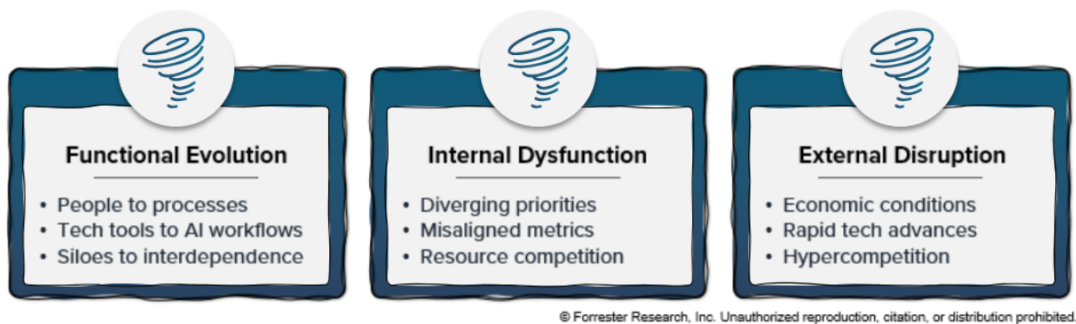
Management teams often struggle because their internal systems operate in isolation. When the market shifts, these disconnected departments fail to respond in unison. This leads to wasted resources and missed targets. Forrester introduces the Connected GTM Framework to solve this, forcing alignment across the entire revenue engine.
Breaking Down the Framework
Forrester identifies three pillars that must function as a single unit to handle current economic pressures. Without this integration, companies struggle to adapt to the rapid pace of change driven by new technologies.
The Three Pillars of Alignment
- Strategy: Defining the long-term vision and target segments based on real-time data.
- Planning: Translating that strategy into actionable resource allocation and budget management.
- Execution: Delivering the message and product to the buyer through synchronized sales and marketing channels.
"Disconnected systems create friction that stalls revenue growth. Leaders who integrate their strategy, planning, and execution gain a clear advantage in volatile markets," according to the recent Forrester analysis.
Why AI Changes the Math
AI isn't just another tool for the marketing department. It is a fundamental shift in how firms identify buyers and manage their sales funnels. When companies use AI without a connected framework, they often deploy expensive technology that fails to integrate with their actual sales execution. This disconnect creates a fragmented customer experience that can damage brand reputation.
Successful firms are using the Connected GTM approach to ensure their AI initiatives directly support their core revenue goals. By linking the planning phase with AI-driven insights, businesses can better predict buyer behavior and adjust their tactics before a quarter ends.
Market Implications for Firms
Investors and analysts are watching how companies manage their operational efficiency. Firms that fail to connect their GTM processes often report higher customer acquisition costs and lower sales conversion rates. In a climate where growth is harder to come by, these inefficiencies show up immediately on the balance sheet.
| Process Area | Risk of Disconnection | Benefit of Connection |
|---|---|---|
| Strategy | Misaligned targets | Unified focus |
| Planning | Budget waste | Optimized spend |
| Execution | Poor buyer experience | Higher conversion |
Traders reviewing market analysis will note that companies with rigid, disconnected structures struggle to pivot when sector-specific trends change. Conversely, organizations that adopt a unified framework often see better margin protection.
What to Watch
Moving forward, the focus will be on how effectively leadership teams bridge the gap between their tech stack and their human workforce. Companies that prioritize this integration will be better positioned to handle sudden shifts in demand. Keep an eye on firms that announce major structural overhauls in their sales operations, as these are often the first signals of a move toward a more connected GTM model. Those who resist this change risk falling behind competitors who can deploy resources with greater speed and precision.