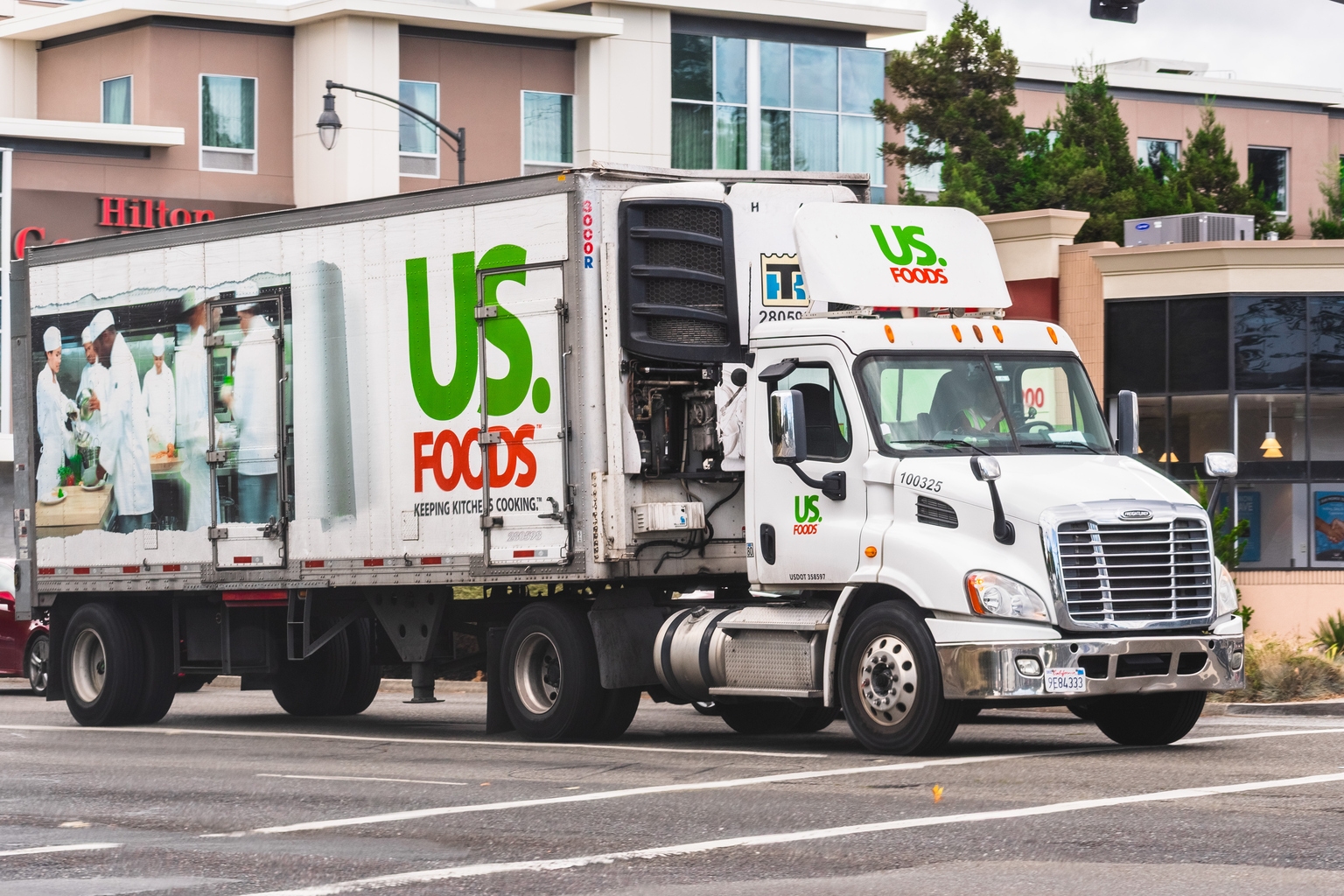
Resilience in a Shifting Consumer Landscape
In an economic environment defined by persistent inflationary pressures and tightening household budgets, the restaurant industry is undergoing a structural shift. As consumers increasingly pivot toward value-oriented dining, US Foods Holding Corp. (NYSE: USFD) has emerged as a standout performer. By successfully capitalizing on the "trade-down" phenomenon—where diners shift from high-end establishments to quick-service and casual dining—US Foods has demonstrated a level of operational agility that marks it as a compelling defensive play for institutional and retail portfolios alike.
While macroeconomic headwinds often rattle the broader hospitality supply chain, US Foods has proven its ability to not only weather volatility but to drive significant business development. The company’s strategic positioning within the food distribution sector allows it to capture market share regardless of whether the consumer is seeking luxury or necessity, making it a critical barometer for the health of the food service industry.
Why the 'Trade-Down' Trend Favors USFD
For investors, the recent performance of US Foods is a masterclass in defensive positioning. When inflation erodes discretionary income, the first casualty is typically fine dining. However, the demand for food service does not disappear; it merely migrates. US Foods, with its massive distribution network and diversified portfolio, is uniquely positioned to supply the mid-market and quick-service segments that capture these displaced consumers.
This migration of capital toward lower-cost dining tiers provides a consistent revenue floor for US Foods. Unlike luxury retailers or high-end hospitality groups that are highly sensitive to cyclical downturns, US Foods benefits from the volume-driven nature of the casual dining and institutional food service sectors. The company’s ability to scale its logistics and procurement to meet this shifting demand has been a key driver behind its recent growth trajectory.
Market Implications and Strategic Outlook
For traders and analysts, the thesis for US Foods rests on its operational efficiency. In a high-interest-rate environment, capital-intensive industries are often viewed with skepticism. However, US Foods has managed its margins effectively, proving that its business model is robust enough to generate growth even when input costs are elevated.
Market participants should watch for the company’s ability to maintain its supply chain advantages as the broader economy grapples with ongoing labor costs and food price volatility. If the current trajectory of the "trade-down" economy continues, US Foods is well-positioned to outperform competitors who lack the same depth of distribution or the ability to pivot rapidly to changing customer preferences.
Forward-Looking Considerations
The fundamental outlook for USFD remains bullish as the company continues to leverage its competitive moat. Investors should monitor quarterly volume figures and margin expansion metrics in upcoming earnings reports to ensure the company is successfully passing through costs while maintaining its foothold in the value-dining segment. As a defensive anchor in a volatile market, US Foods continues to offer a compelling risk-reward profile for those looking to hedge against further consumer spending fatigue.