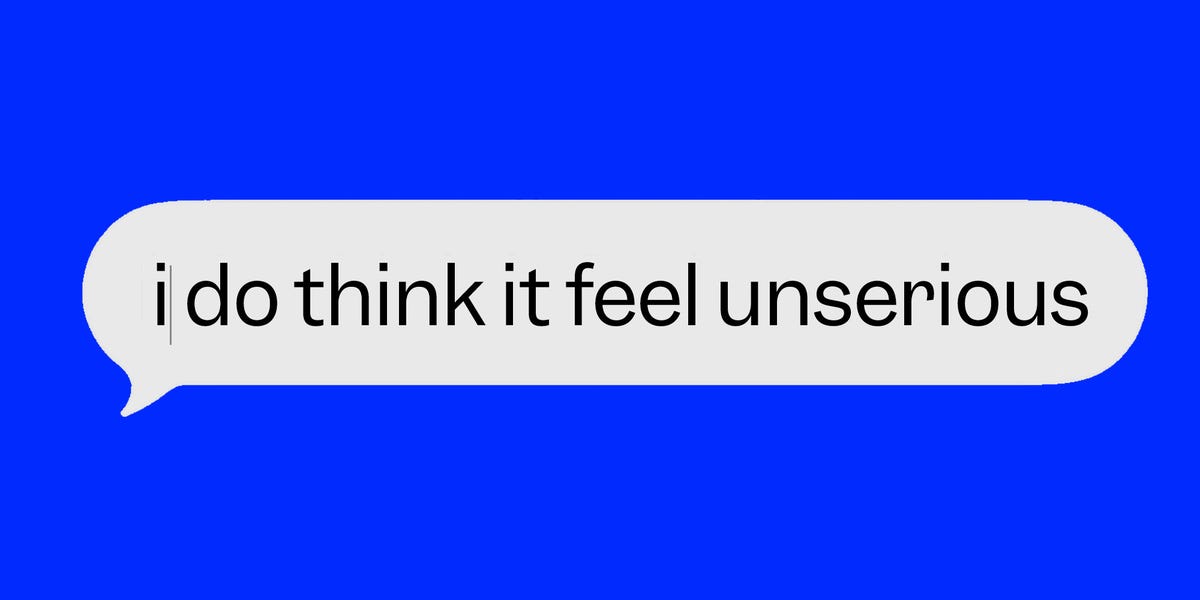
The Shift in Digital Dialects
In the high-stakes world of Silicon Valley, influence is often quantified by market cap, user growth, and disruptive innovation. Yet, a peculiar trend has emerged among the industry’s most prominent figureheads: the deliberate abandonment of standard English capitalization. From the minimalist, lowercase missives of OpenAI CEO Sam Altman to the sparse, unvarnished communication style of Block’s Jack Dorsey, the 'lowercase aesthetic' has transitioned from a stylistic choice into a signal of digital authority.
For the modern professional, communication is the primary currency. When titans of industry discard the foundational rules of grammar—specifically the shift key—it suggests a level of confidence that transcends the need for formal presentation. It implies that the content of the message carries enough weight to stand without the structural support of traditional syntax.
Anatomy of the 'Power Lowercase'
Adopting this style is not merely about laziness; it is about efficiency and a perception of effortlessness. When Sam Altman or Jack Dorsey communicate in lowercase, they are projecting an image of someone who is perpetually 'in the flow'—too busy executing on multi-billion dollar visions to concern themselves with the pedantry of punctuation.
However, for the average observer or aspiring market participant, attempting to mimic this cadence reveals a hidden friction. Adopting this persona for a full week serves as a stark reminder of the psychological divide between those who set the trends and those who follow them. The lowercase style is a linguistic 'high-water mark' of status. When a CEO sends a message without a capital letter, it is a flex: it essentially says, 'I am so secure in my position that I do not need to prove my literacy to you.'
Market Implications: Decoding the Signal
For traders and analysts, parsing the communication styles of C-suite executives has become an unconventional but increasingly relevant form of sentiment analysis. When market-moving figures shift their public tone, it often reflects a broader organizational culture. An executive who communicates with extreme brevity and stylistic minimalism is often signaling a pivot toward lean operations, rapid iteration, and a disdain for bureaucratic bloat.
Investors should view these stylistic shifts as indicators of brand personality. In an era where companies are defined as much by their leadership’s public persona as by their balance sheets, the 'lowercase aesthetic' reflects a broader tech-sector trend toward human-centric, yet ultra-efficient, branding. It is the digital equivalent of wearing a black turtleneck or a hoodie to a board meeting—a rejection of the 'suit-and-tie' formality that historically defined corporate leadership, now replaced by the 'move fast and break things' ethos of the software era.
The Cost of Imitation
There is a fine line between adopting a leadership style and appearing unprofessional. For the individual, the lowercase trend is a double-edged sword. While it may project a sense of nonchalant power for someone with a proven track record, for the junior analyst or the retail trader, it can be perceived as sloppy or dismissive.
As we look forward, the evolution of digital communication will likely continue to strip away these layers of formality. The question for market observers is whether this shift toward minimalist communication will eventually bleed into official corporate disclosures or investor relations. If the industry's most influential leaders continue to normalize this shorthand, we may soon see a landscape where the most powerful market signals are delivered with the least amount of grammatical effort.