Back to Markets
Macro● Neutral

The End of an Era: Air Force Retires 'Sandy' A-10s Following Distinguished Combat Legacy

April 7, 2026 at 06:21 PMBy AlphaScalaSource: businessinsider.com
The End of an Era: Air Force Retires 'Sandy' A-10s Following Distinguished Combat Legacy

As the Air Force moves to retire the iconic A-10 Thunderbolt II, we analyze the combat legacy of the 'Sandy' mission and the strategic pivot toward modern, stealth-oriented aerial warfare.

The Sunset of the Warthog

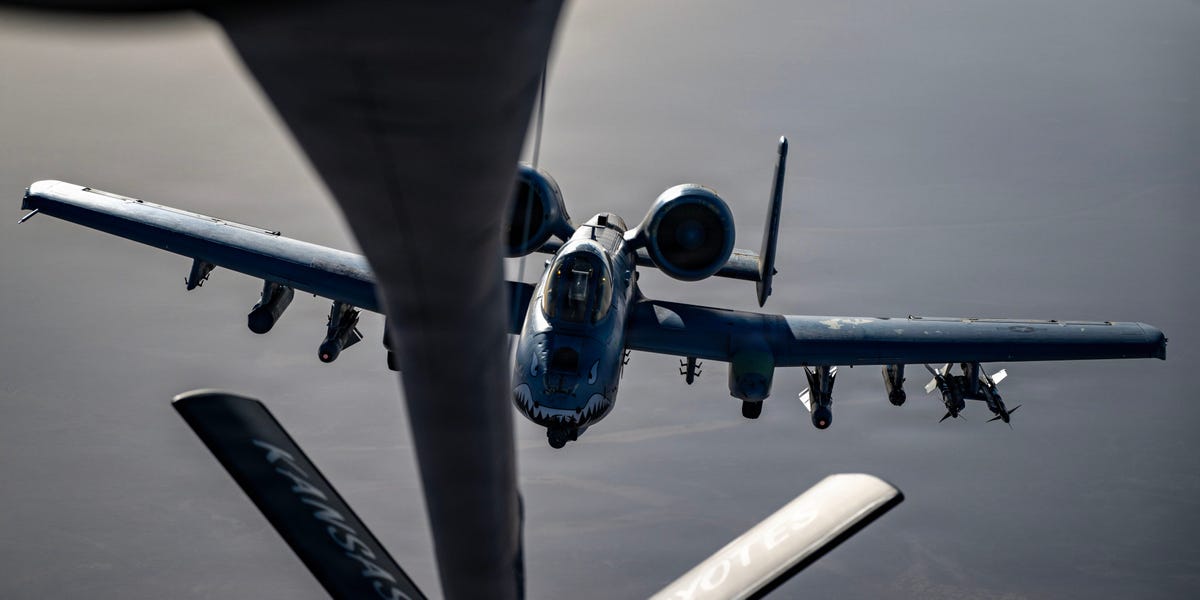
The U.S. Air Force is moving forward with the final phase of its divestment plan for the A-10 Thunderbolt II, the iconic close-air support aircraft affectionately known as the "Warthog." Despite a storied combat history that spans decades of high-stakes theater operations, the Pentagon has determined that the platform no longer aligns with the requirements of modern, contested aerial warfare. The decision marks the conclusion of a long-standing debate over the utility of a slow-moving, heavily armored gunship in an age increasingly defined by standoff munitions and stealth technology.

Combat Proven: The "Sandy" Legacy

To understand the strategic value the A-10 brought to the table, one must look at its performance in the most volatile environments. The aircraft’s role in the "Sandy" configuration—a specialized combat search-and-rescue (CSAR) mission profile—remains the gold standard for ground-support operations.

General Caine, reflecting on the platform’s operational capability, highlighted the A-10’s performance during high-risk rescue operations, specifically citing the recovery of an F-15 pilot. In that engagement, A-10s executed "close-in gunfights," providing critical suppressing fire to neutralize enemy threats while ground forces secured the downed aviator. This ability to operate at low altitudes and deliver precision fire in immediate proximity to friendly forces has been the A-10’s hallmark, a capability that commanders have long argued is difficult to replicate with faster, multi-role fighters like the F-35.

Why the Air Force is Pivoting

For investors and defense analysts, the retirement of the A-10 signifies a broader shift in military spending priorities. The Air Force’s rationale for divestment centers on the aircraft’s vulnerability in "near-peer" conflicts—scenarios where advanced integrated air defense systems (IADS) would likely deny the A-10 the airspace it requires to operate effectively.

While the A-10 remains exceptionally cost-effective for counter-insurgency and low-intensity operations, the Department of Defense is aggressively reallocating capital toward next-generation platforms, long-range bombers, and unmanned aerial systems (UAS). The transition represents a strategic pivot toward the Pacific theater, where the geography and threat environment demand range and electronic warfare capabilities that the legacy Warthog simply cannot provide.

Market and Strategic Implications

For the defense sector, the retirement of the A-10 is a signal to look toward the companies spearheading the Air Force’s modernization roadmap. The shift away from the A-10 confirms that the procurement budget is favoring platforms that can survive in a high-threat environment.

Traders tracking defense stocks should note that the retirement process is not instantaneous. The maintenance and sustainment contracts associated with the A-10 fleet will continue to phase out over the coming years, potentially impacting the aftermarket revenue streams for legacy contractors. However, the primary focus for institutional capital remains the prime contractors involved in the Next Generation Air Dominance (NGAD) program and the continued expansion of the F-35 fleet, which is slated to absorb many of the functional roles previously filled by legacy ground-attack aircraft.

Looking Ahead: The Future of Close Air Support

The Air Force’s decision to move on from the A-10 is a calculated risk. While the platform was unmatched in its specific niche of close-in suppressive fire, the brass has concluded that the future of air superiority lies in speed, stealth, and connectivity. As the A-10 enters the final chapters of its service life, the focus will turn to how effectively the Air Force can transition its close-air support doctrine to a new generation of aircraft that must balance survivability with the same lethality that defined the "Sandy" missions of the past.