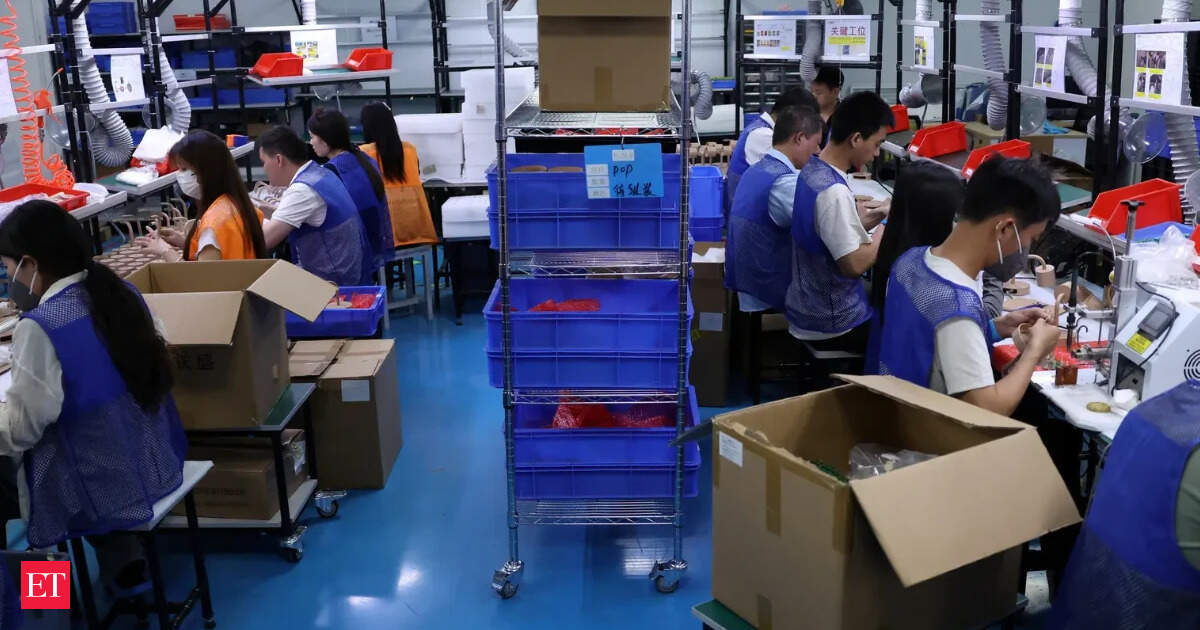
When the U.S. imposed tariffs on Chinese goods, the goal was clear: disrupt China's manufacturing dominance and bring jobs back home. Yet for companies like Agilian Technology, a mid-sized electronics assembler in eastern China, the strategy has revealed a hard truth—China's production ecosystem is stubbornly difficult to replace.
"The tariffs hit us immediately," said a senior manager at Agilian, who requested anonymity. "Some U.S. clients froze orders for months. Others demanded we move production to Vietnam or Mexico."
In the short term, the pressure was acute. Agilian, which supplies components to major American brands, saw its order book shrink as clients absorbed the cost of duties or sought alternative suppliers. The uncertainty rippled through its supply chain, affecting component makers and logistics providers.
However, the anticipated mass exodus of manufacturing did not materialize. "China's supply chain is not just about cheap labor anymore," the manager explained. "It's about the density of suppliers, the skilled workforce, and the speed of scaling up or down. You cannot replicate that in a year or two."
China's own retaliatory tariffs on U.S. goods added another layer of complexity, squeezing margins on both sides. Yet a subsequent partial tariff reduction by Beijing helped stabilize the situation. "When the tariffs came down, it was like a signal," the manager noted. "Clients realized the cost of moving was higher than paying the duty."
This resilience in the face of trade pressure may be a surprise to U.S. policymakers. While the tariffs succeeded in creating friction and cost, they have not fundamentally rerouted the deep, integrated supply chains that define modern electronics manufacturing. For Agilian and many like it, the turmoil has been weathered, not fatal, underscoring why China remains the world's factory floor despite years of geopolitical tension.