Macro● Neutral
PIF Targets Private Credit in King Street Capital Partnership
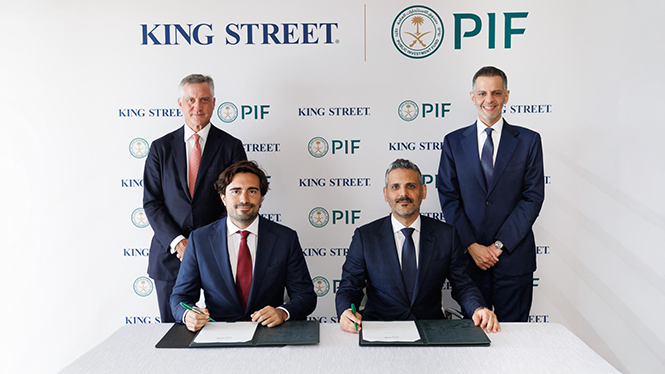
Saudi Arabia’s $900B sovereign fund eyes higher-yield private markets to diversify beyond equities. Watch for scale of commitment to shift global deal flow.
Continue with
A New Frontier for Saudi Capital
The landscape of global private credit is shifting as Saudi Arabia’s Public Investment Fund (PIF) signals a major expansion into the asset class. In a move that underscores the sovereign wealth fund’s drive to diversify its portfolio, the PIF has signed a non-binding memorandum of understanding (MoU) with King Street Capital Management, a prominent global investment firm. This strategic partnership aims to establish a new private credit fund, marking a significant entry for the Saudi sovereign vehicle into the rapidly maturing alternative lending space.
While the MoU remains non-binding, the collaboration brings together the PIF’s immense capital reserves—estimated to exceed $900 billion—with the specialized distressed debt and credit expertise of King Street. For institutional investors and market participants, the move represents a deliberate pivot by the PIF toward higher-yield, private-market instruments as it seeks to move beyond traditional equity holdings.
The Rise of Private Credit
Private credit has emerged as one of the most sought-after asset classes in the post-pandemic era, fueled by a combination of tighter bank lending standards and the search for yield in a volatile macroeconomic environment. As traditional commercial banks have retreated from certain corners of the middle-market lending space due to increased capital requirements, alternative asset managers like King Street have filled the void.
King Street, which oversees approximately $22 billion in assets, has long been a fixture in the credit and special situations arena. By partnering with the PIF, the firm gains a formidable partner with the capacity to anchor large-scale credit facilities. For the PIF, the partnership serves as a gateway to institutional knowledge and a pipeline of credit opportunities that are typically inaccessible to standard retail or passive funds.