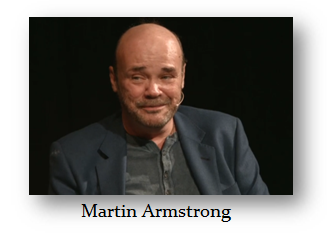
The Warning from Belgrade
In a wide-ranging discussion recently broadcast from Serbia, veteran economic forecaster Martin Armstrong has issued a stark warning regarding the trajectory of the global financial system. Armstrong, known for his proprietary 'Socrates' artificial intelligence model and his cyclical analysis of economic history, suggests that the world stands at a critical juncture where traditional Western geopolitical hegemony is rapidly eroding. The central thesis of his analysis is that the current global order is not merely facing a cyclical downturn, but a fundamental transition that threatens the stability of the US dollar and the prevailing international monetary framework.
The De-Dollarization Narrative
Armstrong highlights a critical shift in the behavior of emerging economies, specifically the BRICS nations, which are increasingly seeking to insulate themselves from the weaponization of the US dollar. According to Armstrong, the decision by the United States and its allies to freeze Russian central bank assets in the wake of the 2022 invasion of Ukraine served as a loud, unambiguous signal to the rest of the world.
"They have effectively told every other nation that their reserves are no longer safe," Armstrong notes. This perception has accelerated the trend toward de-dollarization, as nations perceive the US dollar as a political tool rather than a neutral reserve currency. Armstrong argues that this shift is not a sudden event, but a long-term trend that will eventually lead to a decline in the dollar’s role as the primary medium of exchange, fundamentally altering the global trade landscape.
The Geopolitical Shift to the East
During his visit to Serbia, Armstrong emphasized that the center of gravity for global economic growth has definitively shifted toward the East. He suggests that the West’s focus on sanctions and isolationism is inherently flawed because it ignores the interconnectedness of modern supply chains. By attempting to decouple from major manufacturing hubs, Western nations are inviting domestic inflation and economic stagnation.
Armstrong points out that the current geopolitical tension—specifically the friction between Washington, Moscow, and Beijing—is driving a fragmentation of the global economy. This fragmentation is likely to lead to increased volatility in energy and commodity markets, as trade routes are reconfigured and historical alliances are tested. For the astute trader, this indicates a period where traditional geopolitical assumptions—such as the inevitability of Western economic dominance—can no longer be priced into long-term models.
Market Implications and Historical Context
For investors, Armstrong’s analysis underscores the importance of cyclical awareness. He argues that we are currently navigating the tail end of a major cycle that has defined the post-WWII era. When such cycles terminate, the transition is rarely orderly. Traders should anticipate heightened volatility in sovereign debt markets, as the demand for US Treasuries falters among foreign central banks.
Historically, when reserve currencies lose their luster, the result is often a 'flight to tangibles.' Armstrong suggests that investors should pay close attention to the gold market and other hard assets as a hedge against the potential devaluation of fiat currencies. He warns that the reliance on government-issued debt as a safe-haven asset is a dangerous trap in the current climate of fiscal irresponsibility.
What to Watch Next
As the global landscape continues to shift, the focus for market participants should remain on the actions of non-Western central banks. The pace at which these institutions diversify their reserves away from the US dollar will be a primary indicator of the health of the current international monetary system. Furthermore, watch for increased regional trade agreements that bypass the SWIFT system, as these will serve as the first tangible evidence of the 'New Order' Armstrong describes.
Ultimately, Armstrong’s message is one of caution: the complacency that defined the last several decades is a liability in the current environment. Traders and institutional investors alike must move beyond domestic-centric analysis and adopt a truly global, historically informed perspective to navigate the volatility that lies ahead.