Back to Markets
Macro● Neutral

Markets Defy Geopolitical Volatility: Energy Easing Fuels Broad-Based Recovery

April 9, 2026 at 08:33 PMBy AlphaScalaSource: theetfbully.com
Markets Defy Geopolitical Volatility: Energy Easing Fuels Broad-Based Recovery

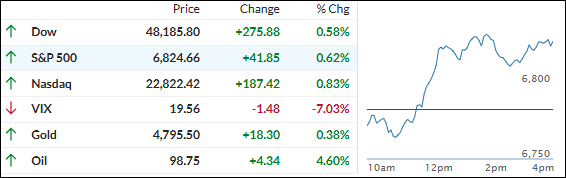
Major indices staged a robust recovery as WTI crude prices retreated from the $100 threshold following a two-week ceasefire agreement in the Middle East.

Resilience in the Face of Uncertainty

In a display of classic market resilience, major U.S. indices successfully navigated early-session turbulence to finish the trading day firmly in the green. Despite initial jitters sparked by escalating geopolitical tensions in the Middle East, investors pivoted toward a 'buy-the-dip' mentality, effectively dampening the volatility that defined the opening bell. The swift recovery underscores a market that, while sensitive to headline risk, is increasingly prioritizing fundamental energy stability over transient conflict-driven shocks.

The Energy Pivot: WTI and the Ceasefire Equation

The most significant catalyst for today’s recovery was the stabilization of the energy markets. West Texas Intermediate (WTI) crude, the primary benchmark for U.S. oil, had sent shockwaves through the trading floor during early morning hours by briefly breaching the psychologically critical $100-per-barrel threshold. However, as the session progressed, prices retraced as traders began to digest the implications of a newly announced two-week “double-sided” ceasefire between the U.S. and Iran.

This cooling in oil prices acted as a vital relief valve for the broader market. When crude prices surge, they often act as a tax on both consumers and corporations, stoking fears of persistent inflation and input cost compression. By easing back from the $100 mark, WTI signaled to traders that the immediate threat of a supply-side shock—at least in the short term—had been mitigated. The two-week ceasefire agreement is currently being viewed as a tactical window rather than a permanent resolution, yet for algorithmic and institutional traders, the temporary de-escalation provided enough clarity to rotate capital back into equities.

Market Implications: Decoding the 'War Jitters'

For professional traders, today’s price action serves as a textbook example of how markets process geopolitical risk. Initial reactions to combat-related headlines are often characterized by sharp, liquidity-driven sell-offs as automated systems and skittish retail participants seek safety in bonds or cash. However, once the initial wave of selling exhausts itself, the focus shifts to the economic impact—specifically, how the conflict will affect inflation, interest rates, and corporate earnings.

Today’s recovery indicates that the market is currently pricing in a 'contained conflict' scenario. The rapid stabilization suggests that the institutional consensus remains focused on the underlying economic trajectory rather than a protracted regional war that would permanently disrupt shipping lanes or energy production. If oil prices remain below the $100 mark, the pressure on central banks to maintain a hawkish stance to combat energy-led inflation may also subside, providing a more favorable backdrop for risk-on assets.

Forward-Looking: What to Watch

While today’s close was undeniably bullish, the market remains in a state of high alert. The two-week timeline for the ceasefire is a critical variable; any sign of a breakdown in these negotiations before the expiration date will likely trigger an immediate reversal in sentiment. Traders should keep a close eye on the WTI futures curve for signs of renewed volatility.

Furthermore, market participants will be monitoring official diplomatic statements closely. As the situation remains fluid, the delta between the 'war risk premium' and 'economic reality' will continue to fluctuate. For the coming sessions, the ability of the major indices to hold today’s gains will depend heavily on whether energy markets continue to signal that supply lines remain secure. Investors should prepare for continued sensitivity to headlines, as the current market environment leaves little room for error regarding geopolitical developments.