Macro● Neutral
Construction Payrolls Hit Record High as Projects Scale Up
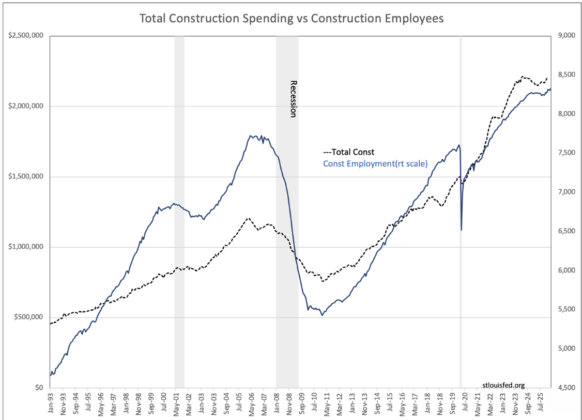
Capital-intensive build-outs are driving labor demand as projects exit early-stage development. Expect hiring momentum to persist through project timelines.
Continue with
Construction employment has reached an all-time high, driven by a strategic shift in how capital is deployed across major projects. Data indicates that while initial “green-field” development—the preliminary phase of a project—typically requires lower capital expenditure, the subsequent, intensive construction phase demands significantly higher spending and a larger labor force.
Industry analysts note that the current surge in payrolls is a direct reflection of these projects moving into their most capital-heavy stages. As the industry advances past the planning and site-preparation phases, the demand for skilled workers has spiked, pushing employment figures to record peaks. This transition from the “green-field” stage to full-scale build-out explains the disconnect often seen between early-stage spending projections and the actual labor costs currently hitting the market.
Despite fluctuating economic conditions, the construction sector remains a primary driver of employment growth. The influx of labor is concentrated in regions seeing high demand for both residential and commercial infrastructure. As firms move forward with these multi-year projects, the momentum in hiring is expected to remain firm, supported by the ongoing necessity to finalize construction timelines that were previously in the early development pipeline.