Commodities● Neutral
Australian Legal Ruling Set to Tighten Global Silver Supply
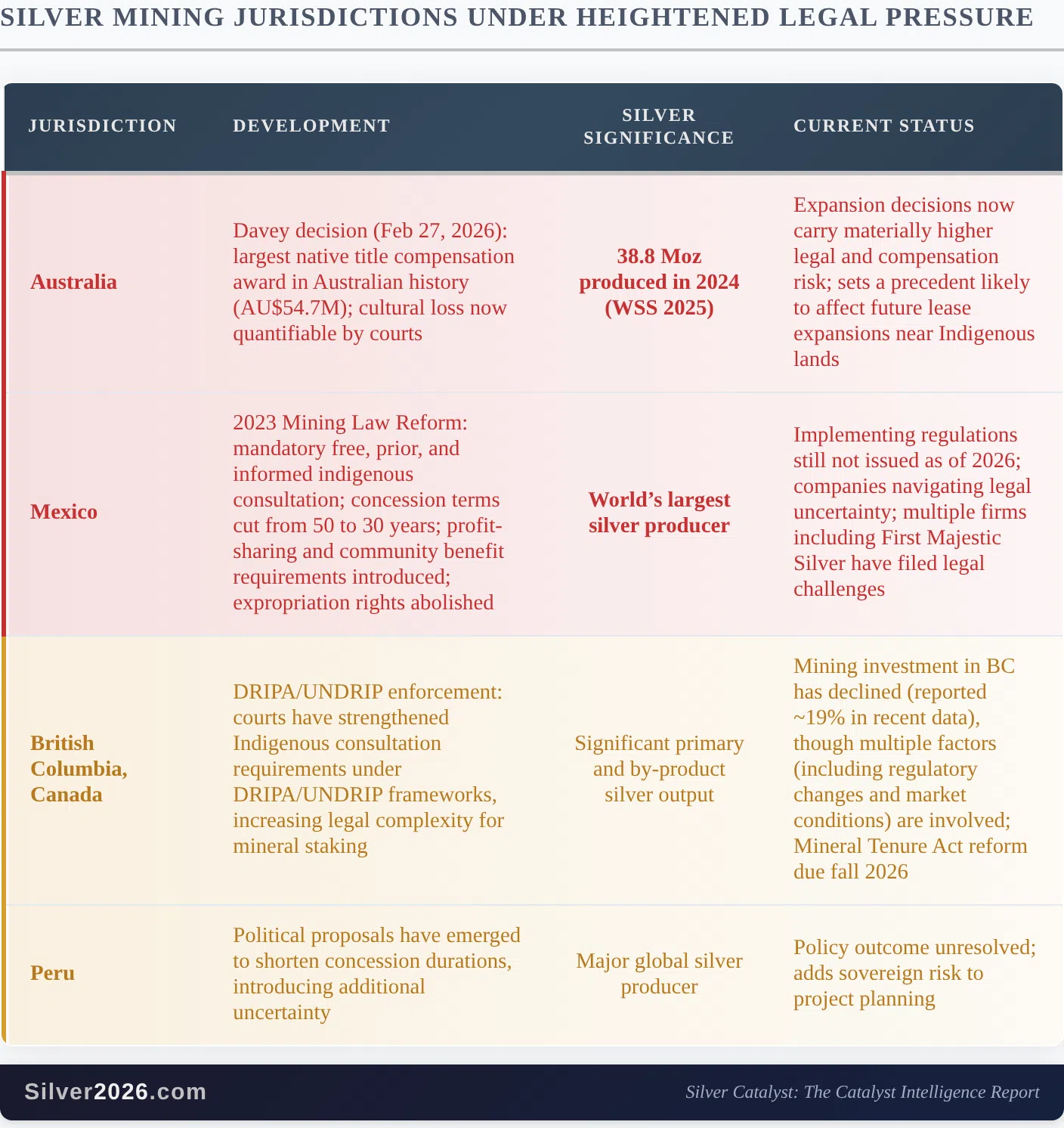
New compensation mandates drive up mining AISC, threatening output levels. Watch upcoming earnings cycles for divestment signals that could lift prices.
Continue with
A New Legal Burden for Miners
Operational expenses for Australian mining firms are ticking upward following a fresh legal ruling that expands compensation risks for land use. This decision creates a sticky cost base for operators down under, but the implications stretch far beyond local borders. As extraction costs climb, the long-term outlook for global silver supply faces new constraints that could force a repricing of the metal.
Investors monitoring the commodities analysis desk know that Australian production remains a linchpin for global industrial metals. When domestic regulatory frameworks shift, the impact is rarely contained. This latest development forces companies to account for higher long-term liabilities, making marginal projects less viable.
The Cost of Compliance
The ruling changes how firms approach land access and compensation agreements. Historically, miners operated with a certain degree of predictability regarding these costs. That era has ended. The new legal standard requires a more generous approach to compensation, which directly feeds into the all-in-sustaining-costs (AISC) of production.
Impact Breakdown
- Higher AISC: Direct operational costs will rise as compensation payouts become a recurring line item.
- Regulatory Risk: Future projects must now account for higher entry barriers and potential litigation expenses.
- Supply Elasticity: Increased costs make it harder for miners to ramp up production when prices surge.