The Dual-Use Efficiency Revolution
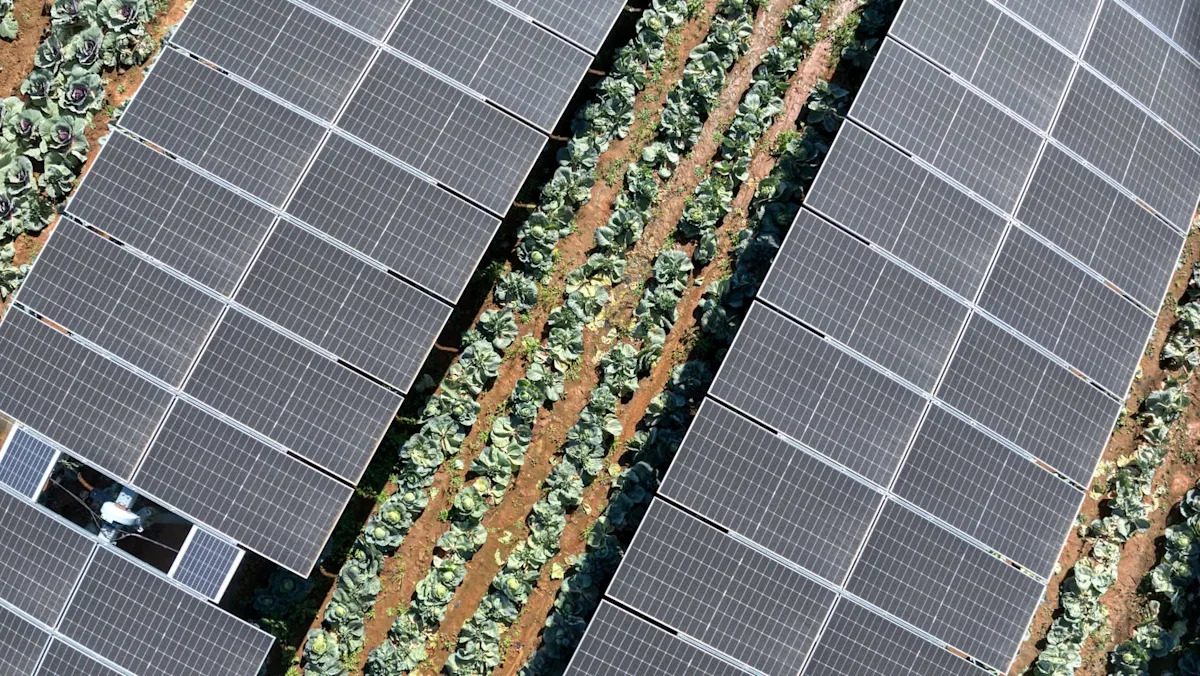
The intersection of renewable energy and industrial agriculture is yielding more than just electricity. Recent field research into agrivoltaics—the practice of co-locating solar photovoltaic panels with crop production—has unveiled a compelling economic narrative. New data indicates that cultivating specific root vegetables, such as turnips, beneath solar arrays not only maintains crop viability but can actively enhance productivity, potentially unlocking nearly $36 billion in cumulative economic value.
For investors and policymakers, this represents a significant shift in the land-use debate. Historically, the expansion of solar farms has been viewed as a zero-sum game, forcing a trade-off between energy independence and food security. The latest findings suggest that by optimizing the microclimate under solar infrastructure, the agricultural sector can achieve greater efficiency while simultaneously generating clean energy.
The Science of Shade-Optimized Agriculture
Agrivoltaics changes the fundamental environmental variables for crops. By providing partial shade, solar panels reduce the direct thermal stress on plants, decrease soil evaporation rates, and optimize water usage—a critical factor in drought-prone regions. The study highlights that turnips, which thrive in moderate conditions, benefit from this filtered sunlight, demonstrating improved growth cycles compared to traditional, unshaded open-field farming.
"Agrivoltaics provides a realistic path to a sustainable food system," the research notes, underscoring the potential to transform underutilized land into high-output, dual-purpose assets. This synergy addresses the 'energy-food-water nexus,' where the reduction in irrigation needs and the increase in land-use intensity drive the projected $36 billion economic benefit.
Market Implications: Why Traders Should Care
For the financial markets, this breakthrough has implications that ripple across several sectors.
-
Renewable Energy Infrastructure: Solar developers (such as NextEra Energy, NEE, or Brookfield Renewable Partners, BEP) may find it easier to secure land-use permits in agricultural states by demonstrating that their projects support, rather than displace, local farming economies.
-
Agricultural Tech and Real Estate: Companies involved in precision agriculture and specialized irrigation are likely to see increased demand as farmers look to integrate solar arrays into their operations to hedge against rising energy costs.
-
ESG and Sustainability Portfolios: As institutional investors pivot toward 'real asset' strategies that offer multi-stream revenue—energy generation plus agricultural output—agrivoltaic projects become highly attractive vehicles for long-term capital allocation.
The Path Forward: Scaling the Model
The economic viability of agrivoltaics is no longer theoretical. As the industry scales, the focus will shift toward standardizing the height and spacing of solar arrays to accommodate mechanized harvesting equipment. If the $36 billion target is to be met, the integration of smart-grid technology with automated crop monitoring will be essential.
Investors should monitor state-level policy incentives and federal subsidies aimed at dual-use land projects. As the technology matures, the ability to harvest both photons and produce from the same acre of land could redefine the valuation of rural real estate and the profitability of the broader renewable energy sector.